Forty per cent of the Surrey Hills is designated as agricultural land, and fascinating technological changes are afoot in the world of arable farming so it’s likely some of them may be coming to our own AONB.
The first agricultural revolution took place when humans first started farming about 12,000 years ago, the second was the end of feudalism and subsequent reorganisation of farmland and the third took place in the 1950s and 1960s with the advance of heavy machinery, fertilisers, pesticides and new high yield crops. The fourth revolution refers to expected changes with the arrival of new technologies and artificial intelligence (AI) poised to solve some of farming’s current challenges.
These solutions could not only help with sustainable food production but also in the fight against climate change. Currently, most farmers decide when to drill, spray or fertilise their crop in ways that would still be recognised by their grandparents or great grandparents. They can only walk a small proportion of their fields and decide when to act based on what they can see, experience and gut instinct.
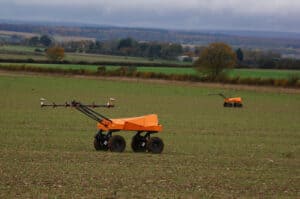 Rowan Duckworth of the Small Robot Company explains how companies like theirs are using AI to help farmers make more informed and precise decision
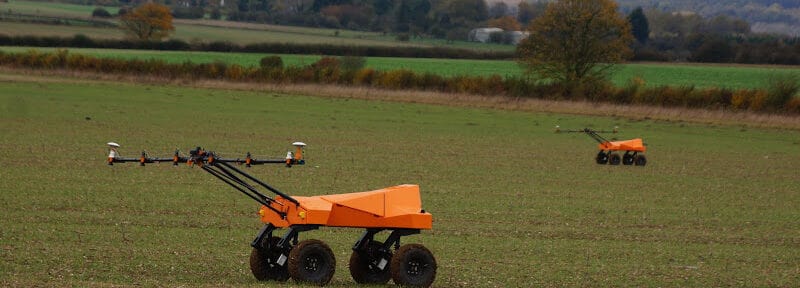
Its vision of ‘Per Plant Farming’ uses its intelligence robot, Tom, to accurately image every plant in the field before Wilma, the artificial intelligence interface, provides valuable insights such as crop count, crop biomass assessment, and weed detection. The data from Wilma is integrated with traditional farm equipment to produce highly accurate sprayer maps.
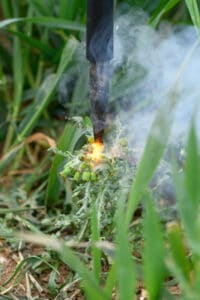
The Small Robot Company is also designing its own non-chemical weeding robot to reduce the use of synthetic weed killers. This gives farmers an important tool against rising levels of herbicide resistant weeds such as black grass. It also allows classification and targeting of beneficial weeds to be left in situ, building soil structure and fertility and providing obvious advantages to pollinators and natural predators.
So watch out for the first robots to tend crops in the Surrey Hills near you. If you see one, you may well have read about it first here!
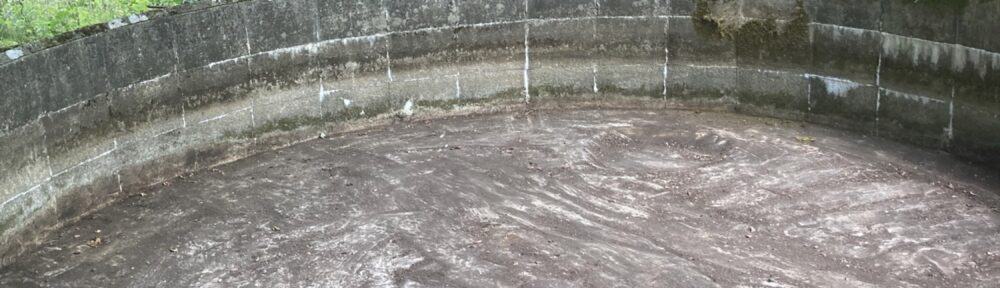
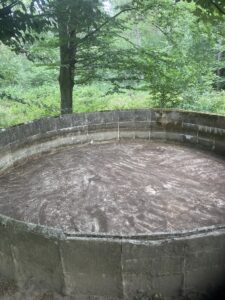 Last week, the Surrey Choices Growth Team did a marvellous job revamping concrete cisterns used by Canadian soldiers during the Second World War, into important wildlife ponds.
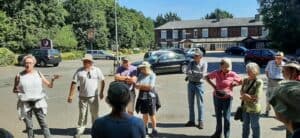 On the 7th August 2022 we held our usual Sunday free walk of the month around the outskirts of Godalming. There was a lot to see on this relatively short walk. We met at the Beefeater car-park on the main road between Guildford to Godalming which was the site of the largest tannery in the area. The main industry around the area was in fact wool with the local mills using large mechanical hammers to pulp the wool. The river Wey joins the Thames at Weybridge and then the barges could travel with their various cargos up and into London.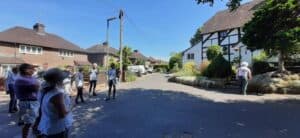
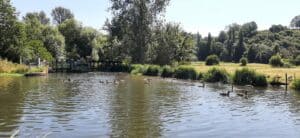 Catteshall Lock, a little further into our walk, is the first lock on the Godalming Navigation. To the left of the river are the ancient Lammas Lands which are historic common land and floodplain. It is still used as common land today with people bringing their cattle and horses to the fields to graze.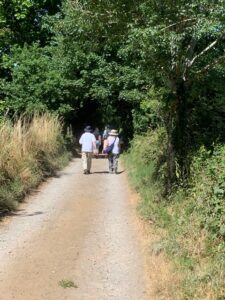
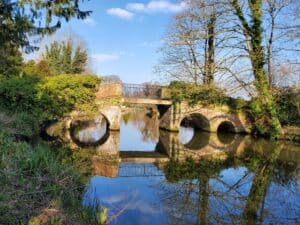
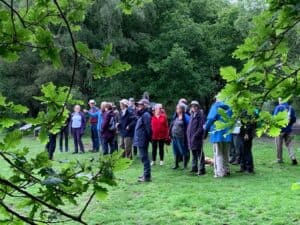
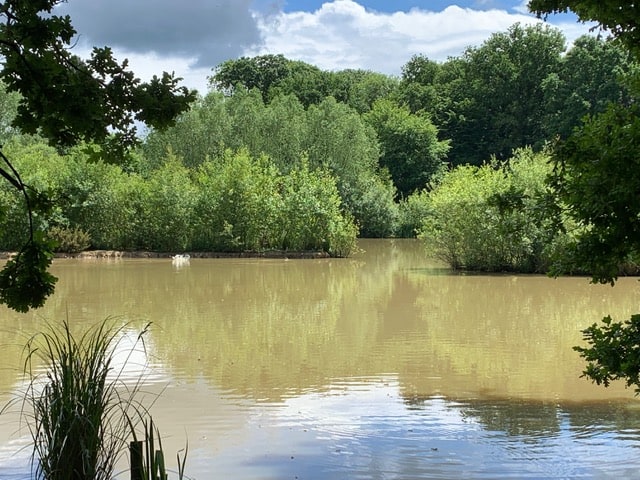
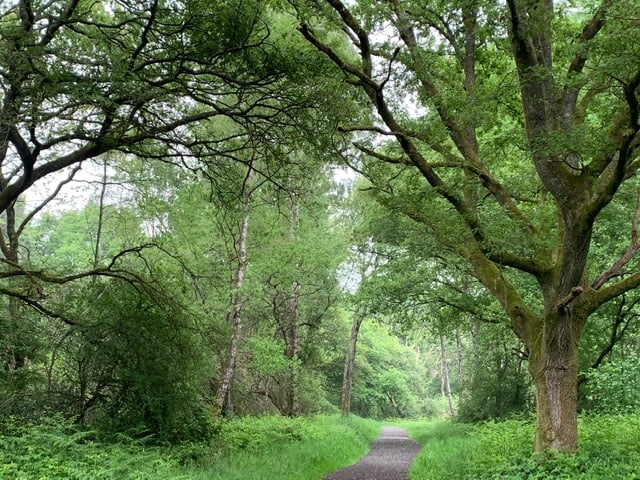
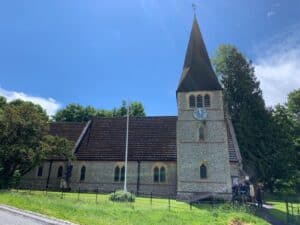
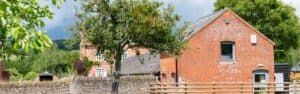
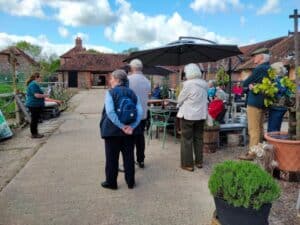 Pierrepont Farm is owned by the Countryside Regeneration Trust (CRT), who work to Protect, Promote and Regenerate farmland, focusing on how farming and wildlife can work together in harmony. Throughout the day, we received a series of talks, which explained exactly how they are making this happen.
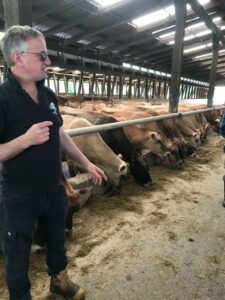 The next talk took place in the Dairy Farm parlour, led by Mike Clear the tenant farmer at Pierrepont Farm. While surrounded by beautiful Jersey Cattle, Mike outlined life on the farm and his love of Jersey cows before, leading the way into the robotic milking parlour.
 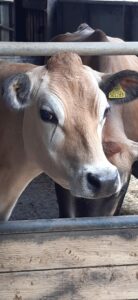 Here, quite remarkably, the cows queue up to be milked before heading on their way!
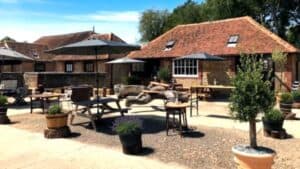 By this point, everybody had worked up quite an appetite and we assembled once again on the terrace of the Old Dairy, where one of the buildings is home to small brewery and taproom, Craft Brews. Led by business owner, Joe, we enjoyed a craft beer tasting session.
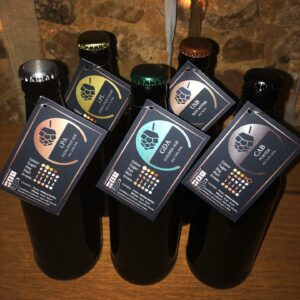 We learnt about the history of beer, the ‘IT’ names given to each brew and most importantly we enjoyed tasting it! Beef burgers were then munched in the sunshine before getting ready for the final talk.
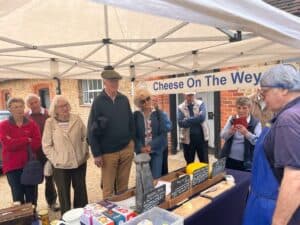 Another small business located on the site of the Old Diary, is ‘Cheese on the Wey’, who create up to eight seasonal cheeses using Jersey milk from the farm. Here we were invited to taste four cheeses (the perfect dessert!) and we learnt about the art of cheese making.
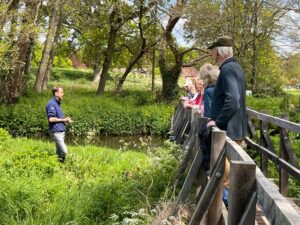 Needing to walk off all the delicious food and beer, we then followed our final guide Glen Skelton, Wetlands Project Manager at Surrey Wildlife Trust, to the River Wey and neighbouring wetland meadow, which is an SSSI (Site of Special Scientific Interest) due to its floristic diversity.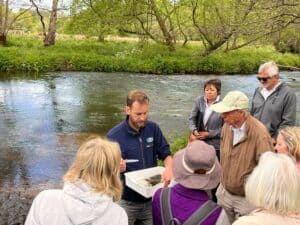
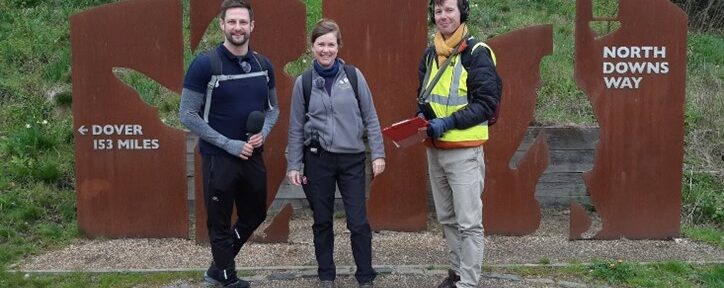
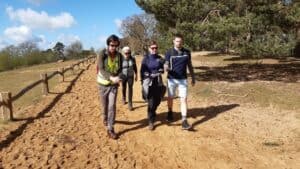
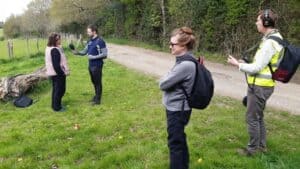
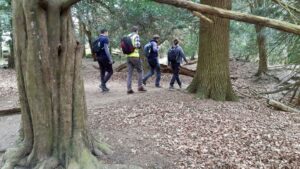 Amongst the aims of the project were promotion of the NDW to encourage more people to get out and enjoy our Surrey countryside. To this end, we were joined for one day by Peter Morris who is the NDW trail manager and on another section by Noreen Siba who is a Trustee of the Downlands Trust.