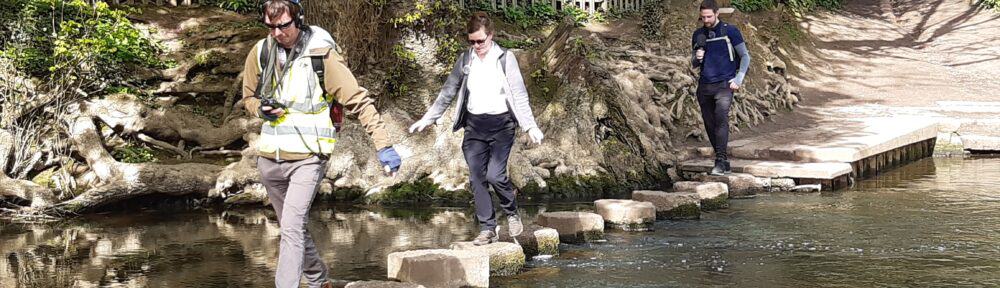
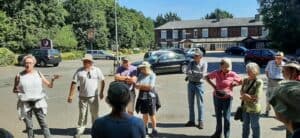
 On the 7th August 2022 we held our usual Sunday free walk of the month around the outskirts of Godalming. There was a lot to see on this relatively short walk. We met at the Beefeater car-park on the main road between Guildford to Godalming which was the site of the largest tannery in the area. The main industry around the area was in fact wool with the local mills using large mechanical hammers to pulp the wool. The river Wey joins the Thames at Weybridge and then the barges could travel with their various cargos up and into London.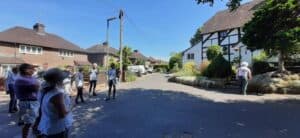
A short walk towards Godalming we came upon 10 Almshouses which were the brainchild of Richard Wyatt who was a wealthy business merchant in Dunsfold. The stipulated that none of the tenants should be drunkards, swear or blaspheme and that every Sunday they would attend the local church in Godalming to hear prayers.
 Catteshall Lock, a little further into our walk, is the first lock on the Godalming Navigation. To the left of the river are the ancient Lammas Lands which are historic common land and floodplain. It is still used as common land today with people bringing their cattle and horses to the fields to graze.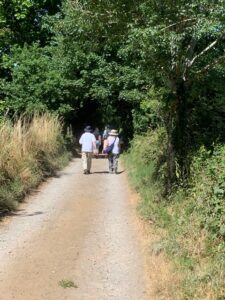
The flood defences at the far end of the field were completed in October 2019 at a cost of £4.5M. All the houses which were on the same level as the flood plains would flood and the water would come up through their floors. On at least one occasion the river levels ere so high that the main road between Godalming and Guildford was impassable. They have installed a pumping station which can pump 84 litres per second into a small stream in front of the barrier called hells ditch.
Catteshall Mill which was further into our walk is listed in the Domesday book and used to house the largest Fourneyron enclosed turbine ever built. He was the first maker of hydropower turbines and these were used to replace the water wheels.
Towards the halfway point of our walk we came upon The Ram Cider House which was built in the 16th Century and people came from miles around to sample some of their 35 different types of ciders. Unfortunately it is now a private dwelling.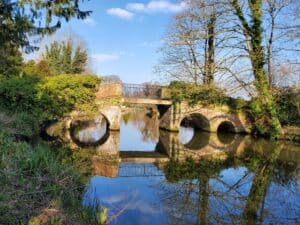
Crossing back over the river we used Trowers Footbridge which was probably the entrance to Unstead Park. It was bought at auction in 1873 for around £37,5000.00. It had electricity installed in 1912 but its water was obtained from a hydraulic ram gravity pump near the Cider house and this was piped up the hill to the estates own reservoir and hence the pub got it’s name The Ram Cider House.
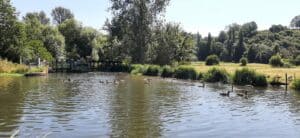
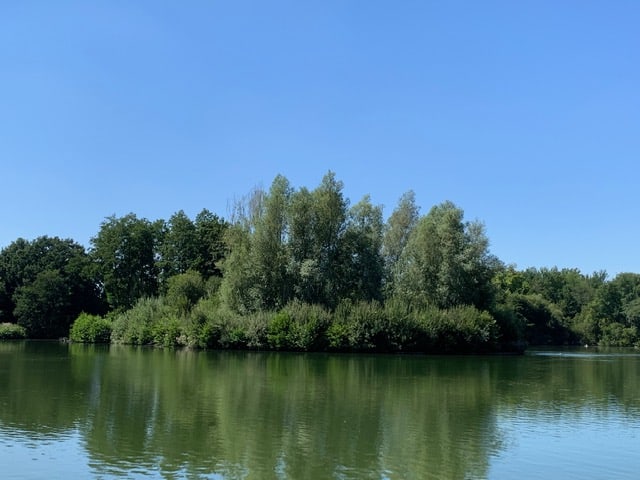
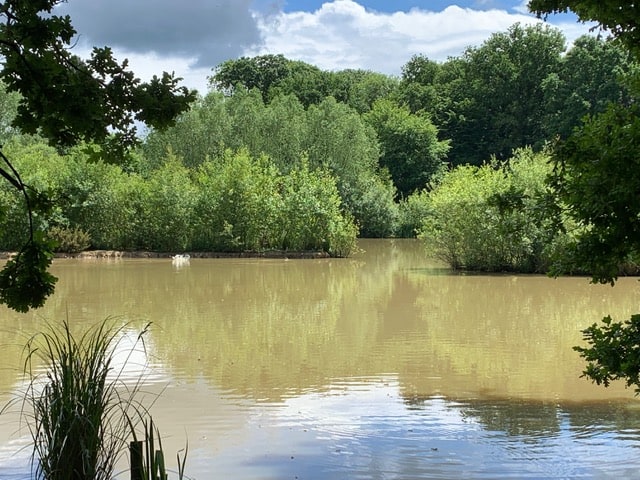
We ended up walking around broadwater lake which is owned by Godalming Angling Society and covers around 10 acres. It is well stocked with carp, rudd and perch weighing up to 30 pounds. On hot days they come to the surface and we watched as a family fed them like tame ducks.
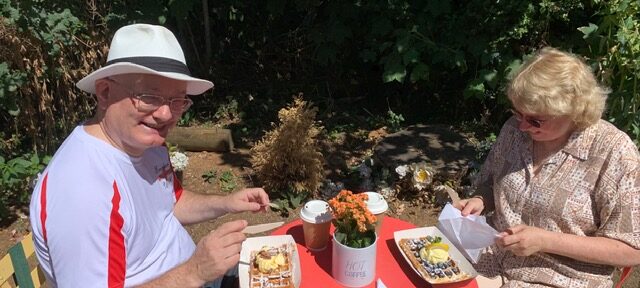
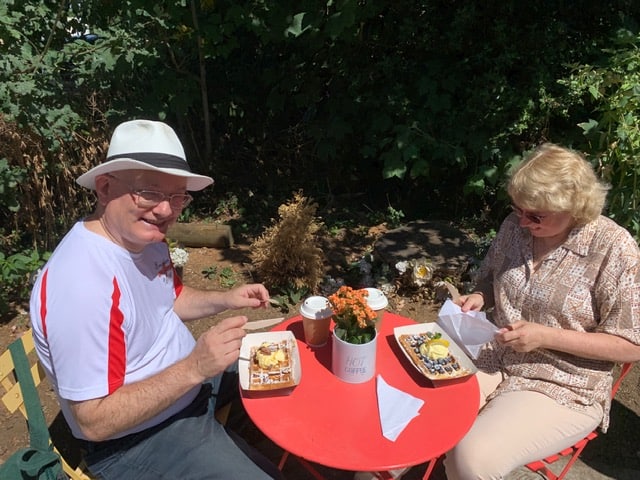
We then participated in some very welcome and delicious waffles and coffee before strolling back along the lake to the start of the walk.
Sall Baring
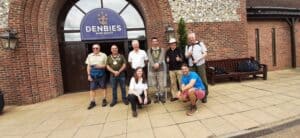
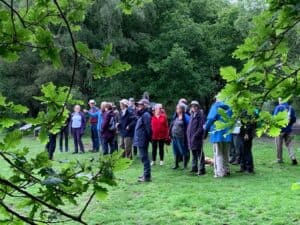
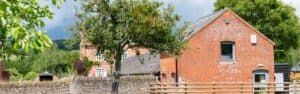
 Pierrepont Farm is owned by the Countryside Regeneration Trust (CRT), who work to Protect, Promote and Regenerate farmland, focusing on how farming and wildlife can work together in harmony. Throughout the day, we received a series of talks, which explained exactly how they are making this happen.
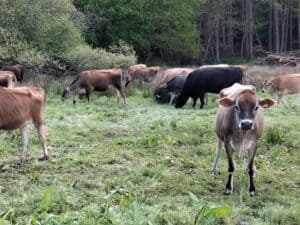
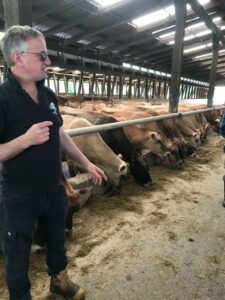 The next talk took place in the Dairy Farm parlour, led by Mike Clear the tenant farmer at Pierrepont Farm. While surrounded by beautiful Jersey Cattle, Mike outlined life on the farm and his love of Jersey cows before, leading the way into the robotic milking parlour.
 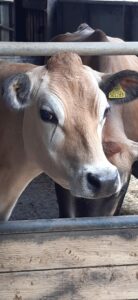 Here, quite remarkably, the cows queue up to be milked before heading on their way!
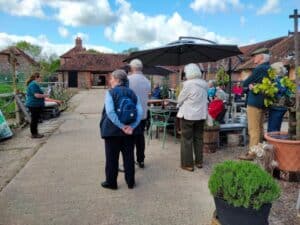
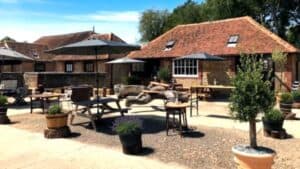 By this point, everybody had worked up quite an appetite and we assembled once again on the terrace of the Old Dairy, where one of the buildings is home to small brewery and taproom, Craft Brews. Led by business owner, Joe, we enjoyed a craft beer tasting session.
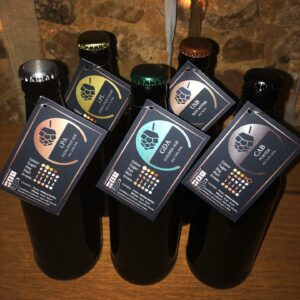 We learnt about the history of beer, the ‘IT’ names given to each brew and most importantly we enjoyed tasting it! Beef burgers were then munched in the sunshine before getting ready for the final talk.
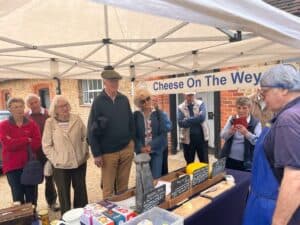 Another small business located on the site of the Old Diary, is ‘Cheese on the Wey’, who create up to eight seasonal cheeses using Jersey milk from the farm. Here we were invited to taste four cheeses (the perfect dessert!) and we learnt about the art of cheese making.
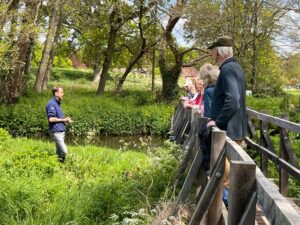 Needing to walk off all the delicious food and beer, we then followed our final guide Glen Skelton, Wetlands Project Manager at Surrey Wildlife Trust, to the River Wey and neighbouring wetland meadow, which is an SSSI (Site of Special Scientific Interest) due to its floristic diversity.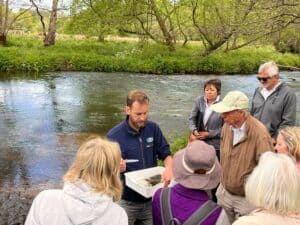
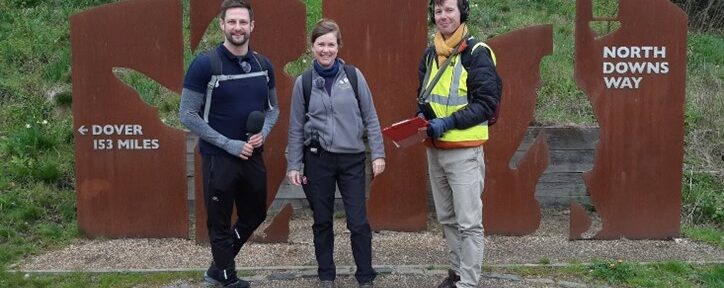
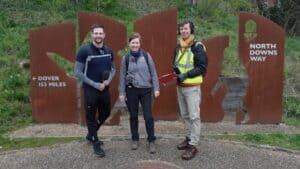
 Amongst the aims of the project were promotion of the NDW to encourage more people to get out and enjoy our Surrey countryside. To this end, we were joined for one day by Peter Morris who is the NDW trail manager and on another section by Noreen Siba who is a Trustee of the Downlands Trust.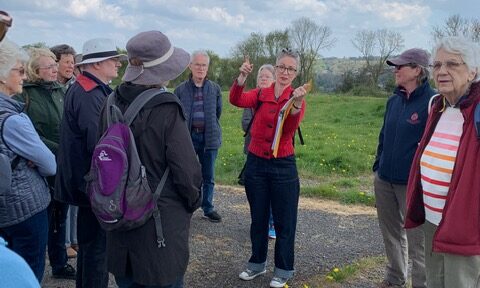
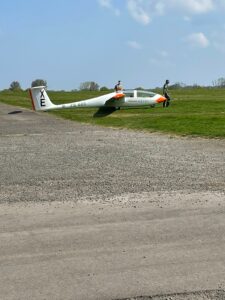
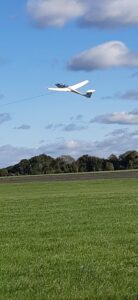 Airfield.